
For kids and parents
Astronomy for Kids: Fly Through the Solar System, Planet by Planet
Kids remember what they experience. On a LIFTONAUT flight they count down with Mission Control, watch the sky turn black, see their plush zero-g indicator start to float, and then meet the Moon, Mars and Saturn up close while a friendly guide explains what they are looking at, with real photos and real numbers.
Astronomy books are wonderful, but a planet on a page is still a picture. In a flight, the size of Jupiter, the darkness of space and the distance to Pluto stop being numbers and start being something children feel.
LIFTONAUT is a simulation, so nobody leaves the ground, and every fact a child hears comes from NASA or another official source.
Why flying beats reading: astronomy kids remember
Children learn best when they are curious, and nothing sparks curiosity like a countdown. A flight turns abstract ideas into moments: the push of the launch shown on the instruments, the instant everything floats, the Moon growing in the window. Each moment comes with one clear explanation from the guide, never a wall of text.
Because the planets are where they really are on the day of the flight, the trip is different every time, and children can compare what they saw with the real sky.
What kids learn on each tour
The Moon: six Apollo landing sites
Twelve astronauts walked on the Moon between 1969 and 1972, and their footprints are still there, because the Moon has no wind or rain. Gravity is six times weaker, so you could jump six times higher. The tour marks the six places where the Apollo landers touched down. See our Moon tour page.
Mars: Olympus Mons and the rover sites
Mars is red because its dust has rusted. It has the biggest known volcano in the Solar System, Olympus Mons, nearly three times as tall as Mount Everest, and the guide shows where the rovers Curiosity and Perseverance landed. More on our Mars page.
Saturn: rings and moons
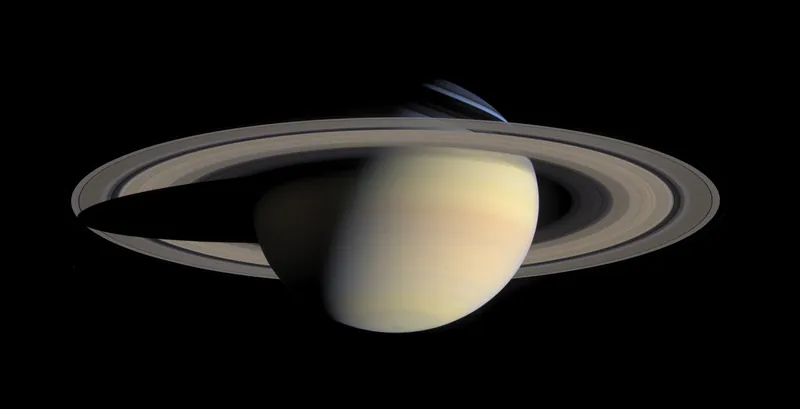
Saturn's rings are billions of pieces of ice and rock, from tiny grains to chunks as big as a house, and the planet is less dense than water. It has 293 confirmed moons, more than any other planet. Its biggest moon, Titan, has lakes of liquid methane. More on our Saturn and Jupiter page.
Try thisThe planets in order from the Sun: Mercury, Venus, Earth, Mars, Jupiter, Saturn, Uranus, Neptune. A classic way to remember them: My Very Educated Mother Just Served Us Noodles.
Real photos and real numbers, with sources
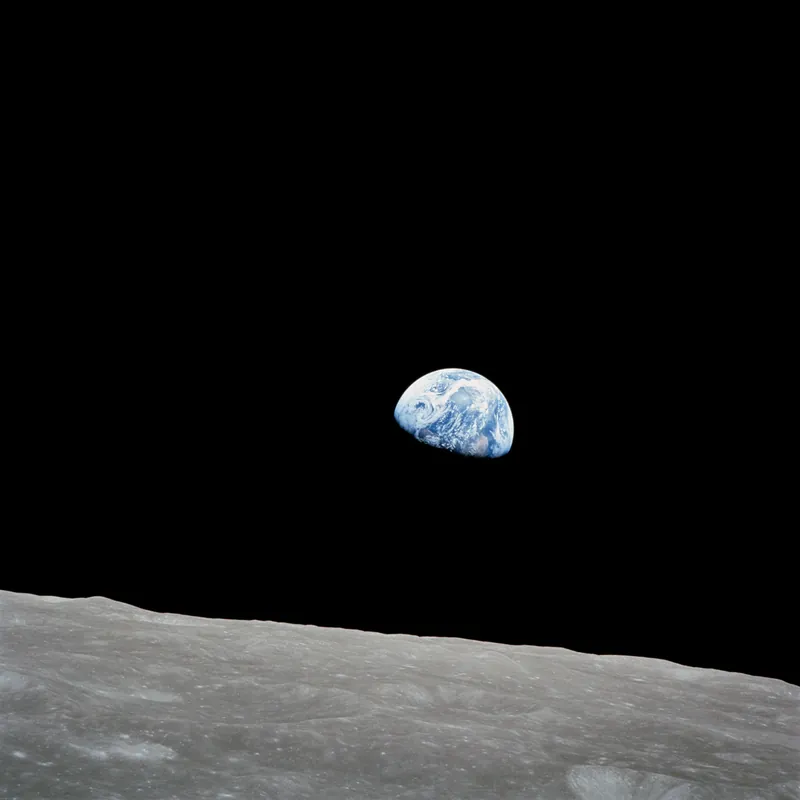
During the flight, real photos appear on screen at the right moments: Earthrise from Apollo 8, Saturn from Cassini, Pluto's heart from New Horizons, each with its credit. The numbers on the instruments and in the guide's lessons come from the NASA Planetary Fact Sheets and JPL, and the list of sources is public.
We also skip the myths. Shooting stars do not burn up because of friction: the air in front of them is squeezed so hard that it heats up. And the Great Wall of China is not visible from the Moon.
A guide who talks: reading is optional
A guide narrates the flight and Mission Control speaks on the radio, so a child who cannot read yet can still follow everything. The voices are in English and Romanian; all text on screen, including subtitles, is also available in Spanish, German and Italian, which makes LIFTONAUT handy for children learning a second language.
For parents: age, length and how to join in
- Age. Children from about six enjoy it most, ideally with an adult nearby.
- Length. The Moon tour lasts about 10 minutes, Mars about 12, the Grand Tour about 26. The free trial flight is a good first step.
- Safety. The crew chat removes links, emails and phone numbers. Under-18s never see other passengers' photos, and their own photo is never shown to anyone else.
- No account for kids. An adult books; children join with a link and a code.
Want to fly together? Book seats next to each other, or take a private rocket for the whole family or a birthday party. Teachers will find classroom ideas in our virtual field trip guide.
Astronomy questions kids ask
How do I teach astronomy to kids?
Start with what they can see: the Moon's changing shape, the brightest planets, a sunset. Then make it an experience, such as a planetarium visit or a simulated flight where they see the planets up close, and keep each explanation short and true.
How many planets are in the Solar System?
Eight: Mercury, Venus, Earth, Mars, Jupiter, Saturn, Uranus and Neptune. Pluto has been classified as a dwarf planet since 2006, and astronomers officially recognize five dwarf planets in all.
What is the order of the planets from the Sun?
Mercury, Venus, Earth, Mars, Jupiter, Saturn, Uranus and Neptune. The first four are rocky; the last four are giants made mostly of gas and ice.
What age can kids start learning astronomy?
As soon as they ask questions about the sky. Young children can watch the Moon and spot planets with a parent; from about six, a narrated simulated flight works well.
Is a space simulator good for learning about space?
Yes, if it is accurate. LIFTONAUT uses NASA and JPL data, shows real mission photos with credits and puts the planets at their real positions, so what children learn is correct.
Sources
The numbers on this page come from these official sources.