
Learn astronomy
Learn Astronomy Online by Flying Through It
The hardest things to learn in astronomy are the ones a diagram cannot show: how big the Solar System really is, how empty, how fast things move and how long light takes to cross it. A guided flight through it, with real positions and a source for every number, makes those ideas stick.
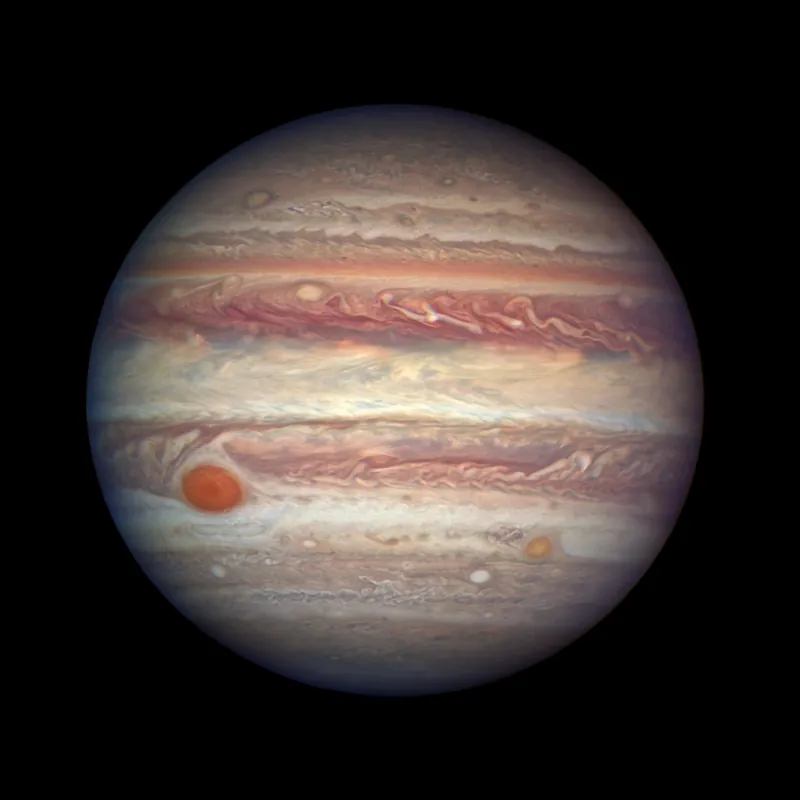
This page is for curious beginners, from teenagers to adults who always meant to learn the sky. It explains what a simulator can and cannot teach, the big ideas worth understanding first, and a simple learning path built on three flights.
LIFTONAUT is a simulation: you watch from a passenger seat while the rocket flies itself. That frees you to look, listen and ask why.
Why a simulator teaches astronomy better than a diagram
Textbook diagrams squeeze the planets together so they fit on a page, with sizes and distances on different scales. It is the only way to print them, and it quietly teaches the wrong picture. In a simulation the planets keep their real sizes and their real distances, so you notice how long nothing happens between them.
Motion is the other advantage. You see a moon going around its planet, the Sun's light growing weaker with distance, the line between day and night moving across a surface. Those are the ideas that turn facts into understanding.
What you learn: scale, orbits, gravity and light
Scale: why the Solar System is mostly empty
The Sun is about 1.39 million km across, yet Earth orbits about 150 million km away, more than a hundred Suns lined up. About 30 Earth-sized planets would fit between Earth and the Moon. Even the asteroid belt is mostly empty: neighboring asteroids are on average more than three times the Earth–Moon distance apart.
Orbits and gravity in motion
An orbit is a fall that never ends: a spacecraft moves sideways so fast that it keeps missing the ground. The same rule shapes the whole Solar System. The closer a planet is to the Sun, the faster it moves: Mercury travels at about 47 km/s, Earth at about 30 km/s and Neptune at only about 5 km/s.
Light, distance and travel time
Light is the fastest thing there is, almost 300,000 km every second, and it still takes about 8 minutes and 20 seconds to reach us from the Sun, more than an hour to reach Saturn and about four hours to reach Neptune. When you look at a planet, you see it as it was when the light left it.
- sunlight to Earth
- 8 min 20 s
- light from Earth to Saturn
- over 1 hour
- sunlight to Neptune
- about 4 hours
From the Sun to the Kuiper Belt: the Complete Solar System tour
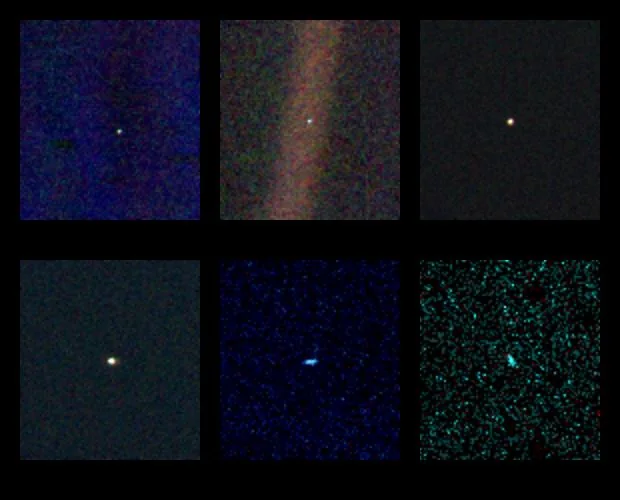
For a full course in one flight, the Complete Solar System tour flies close to the Sun, visits all eight planets and the five recognized dwarf planets, flies past fourteen major moons, an asteroid and comet 67P, and continues to the Kuiper Belt and the spacecraft we have sent out there. Where no close-up photo exists, as for Eris, Haumea and Makemake, the screen says the surface is a reconstruction. Details on the Complete Solar System page.
Every number has a source: how we keep it accurate
The numbers in the flight come from the NASA Planetary Fact Sheets, JPL's orbital elements, NASA Science, ESA and the International Astronomical Union, and each fact in the guide's lessons is linked to its source. A separate review checks the facts before they are recorded as voice lines.
When science is not sure, we say so: the Oort Cloud, for example, is presented as a hypothesis, because no object has ever been observed inside it. And we leave out the popular myths, such as stars twinkling in space or space being freezing for a ship in sunlight.
A learning path: three flights, one weekend
- The free trial flight: the launch, orbit and the trip to the Moon. Focus on the atmosphere and on what orbit really is.
- The Grand Tour, about 26 minutes: every planet and Pluto. Focus on the two families of planets, rocky and giant.
- The Complete Solar System: the Sun, dwarf planets, comets and the edge. Focus on scale and on how we know what we know.
Between flights, step outside: find the Moon, look for the brightest planets, and compare the sky with the positions you saw on the tour. For children, see astronomy for kids.
Astronomy-learning questions
How can I learn astronomy online for free?
NASA Science, NASA Space Place and ESA publish free, reliable explanations and images for every level. Combine them with observing the real sky, and with a free simulated flight such as the LIFTONAUT trial, to see the ideas in motion.
Where should a beginner start in astronomy?
With the sky you can see: the Moon's phases, the brightest planets and the main constellations. Then learn the scale of the Solar System, which is the idea most people get wrong, before moving on to stars and galaxies.
Can a simulator teach real astronomy?
Yes, if it uses real data: scale, motion and light travel time are easier to grasp when you see them. It complements observing the sky and reading good sources; it does not replace them.
How big is the Solar System?
Neptune orbits about 30 times farther from the Sun than Earth, the Kuiper Belt extends to about 50 times, and the Voyager probes left the Sun's bubble of solar wind at about 120 times. The hypothetical Oort Cloud may reach 100,000 times the Earth–Sun distance.
What are the planets and dwarf planets of the Solar System?
The eight planets are Mercury, Venus, Earth, Mars, Jupiter, Saturn, Uranus and Neptune. The five dwarf planets recognized by the International Astronomical Union are Ceres, Pluto, Haumea, Makemake and Eris.
Sources
The numbers on this page come from these official sources.
- NASA NSSDCA · Planetary Fact Sheets (sizes, orbital speeds)
- NASA/JPL · Astrodynamic Parameters (speed of light, astronomical unit)
- NASA Science · Moon facts (30 Earths between Earth and the Moon)
- NASA/JPL Night Sky Network · The scale of the asteroid belt
- NASA Science · Kuiper Belt facts
- NASA Science · Oort Cloud facts
- NASA · The voyage to interstellar space
- NASA Science · Dwarf planets